


Your feet don't ache from overuse. They ache from flat ground.
Every insole you've bought added more of it.
The Cobblestone Protocol adds the one thing they've been missing — five minutes on ground that fights back.
Yes. It's stepping on rocks. That's the point.
-
✅
Come off a 12-hour shift with your evening left
-
⚡
Five minutes, standing where you already stand
-
🔒
60 nights, or every penny back
Sizes + what's in the box
One mat. No power supply, no batteries, no app, nothing to replace.
Small — 35 × 35 cm. Under a desk, in front of the sink.
Medium — 120 × 35 cm. Room to move both feet.
Large — 175 × 35 cm. Long enough to walk, which is how Oregon ran it.
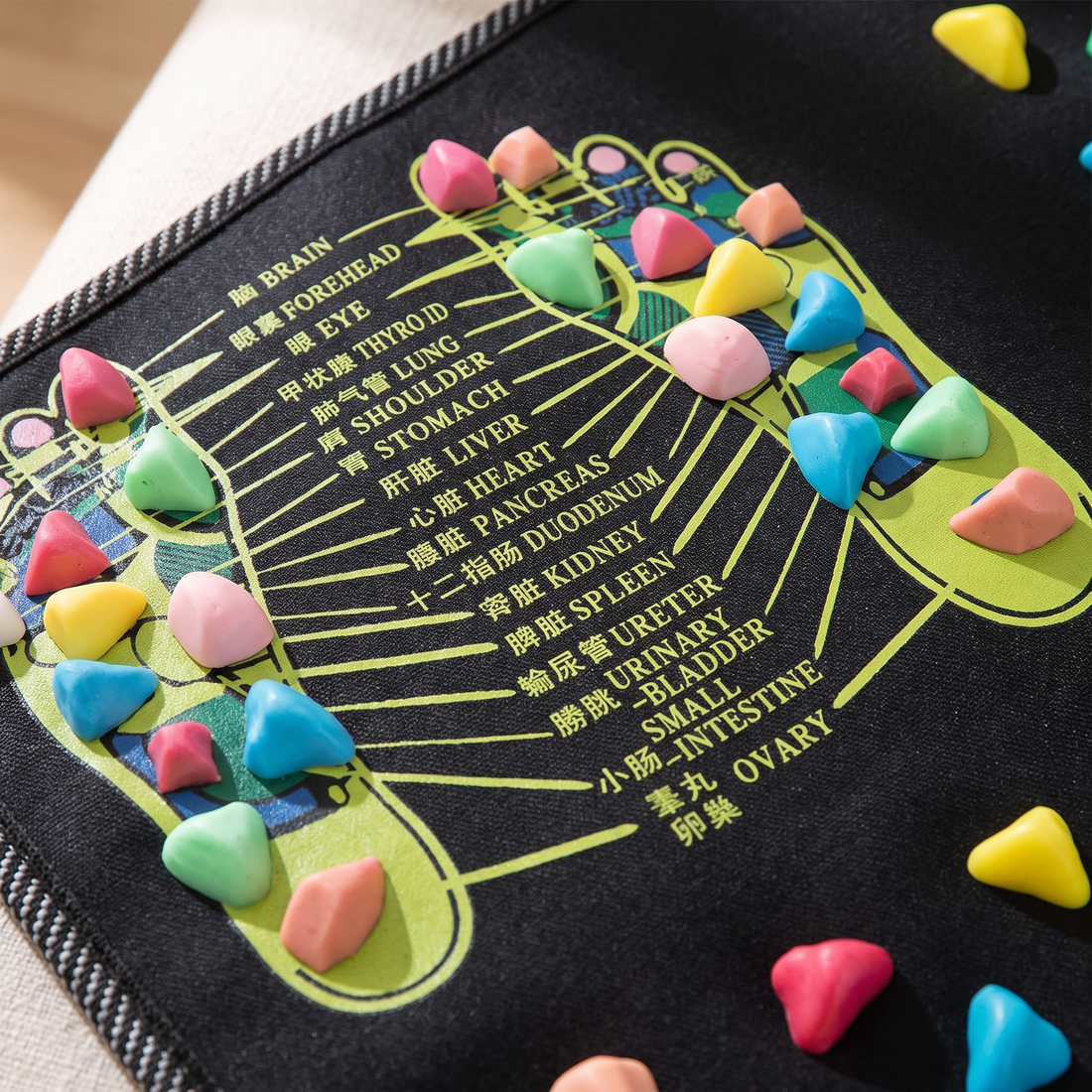
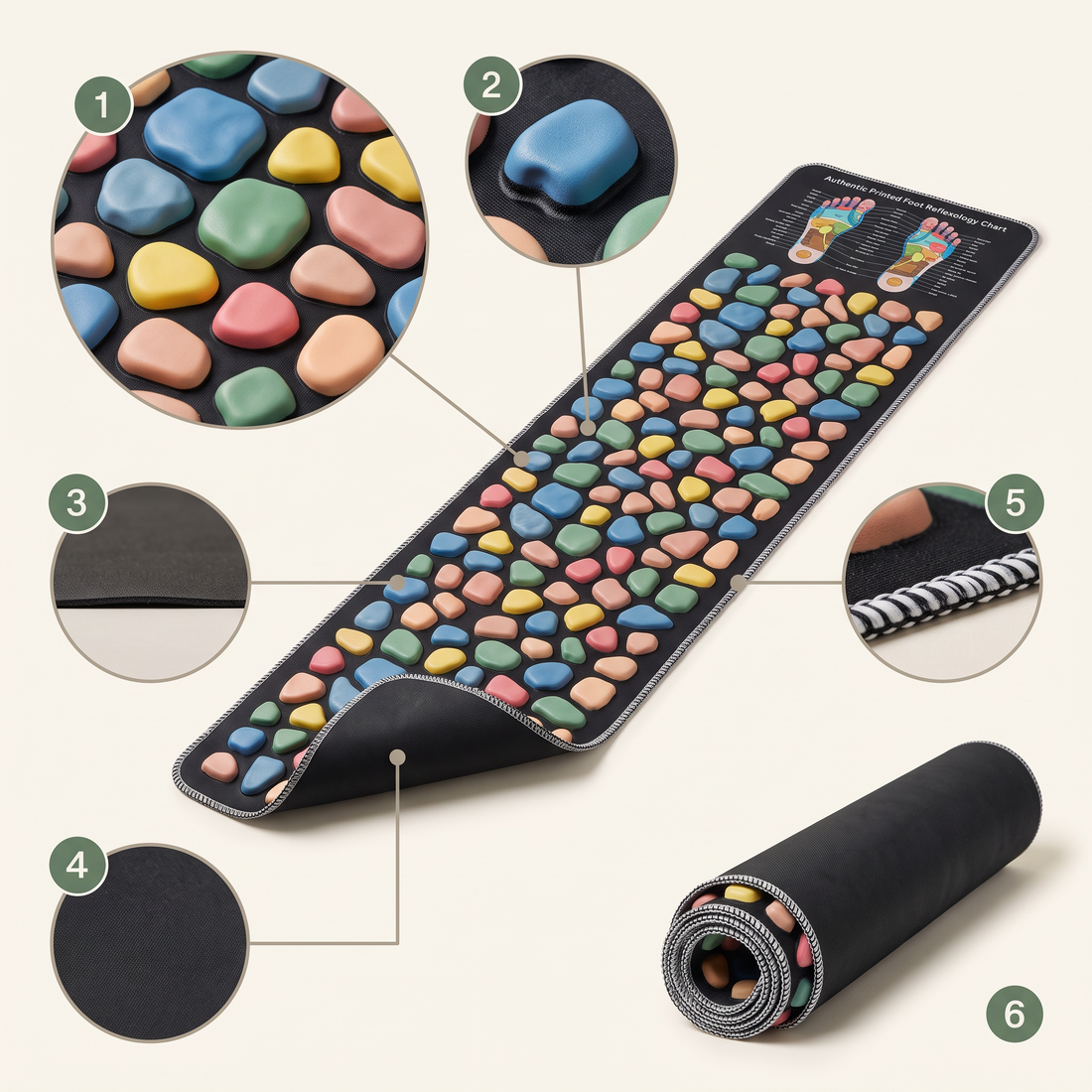
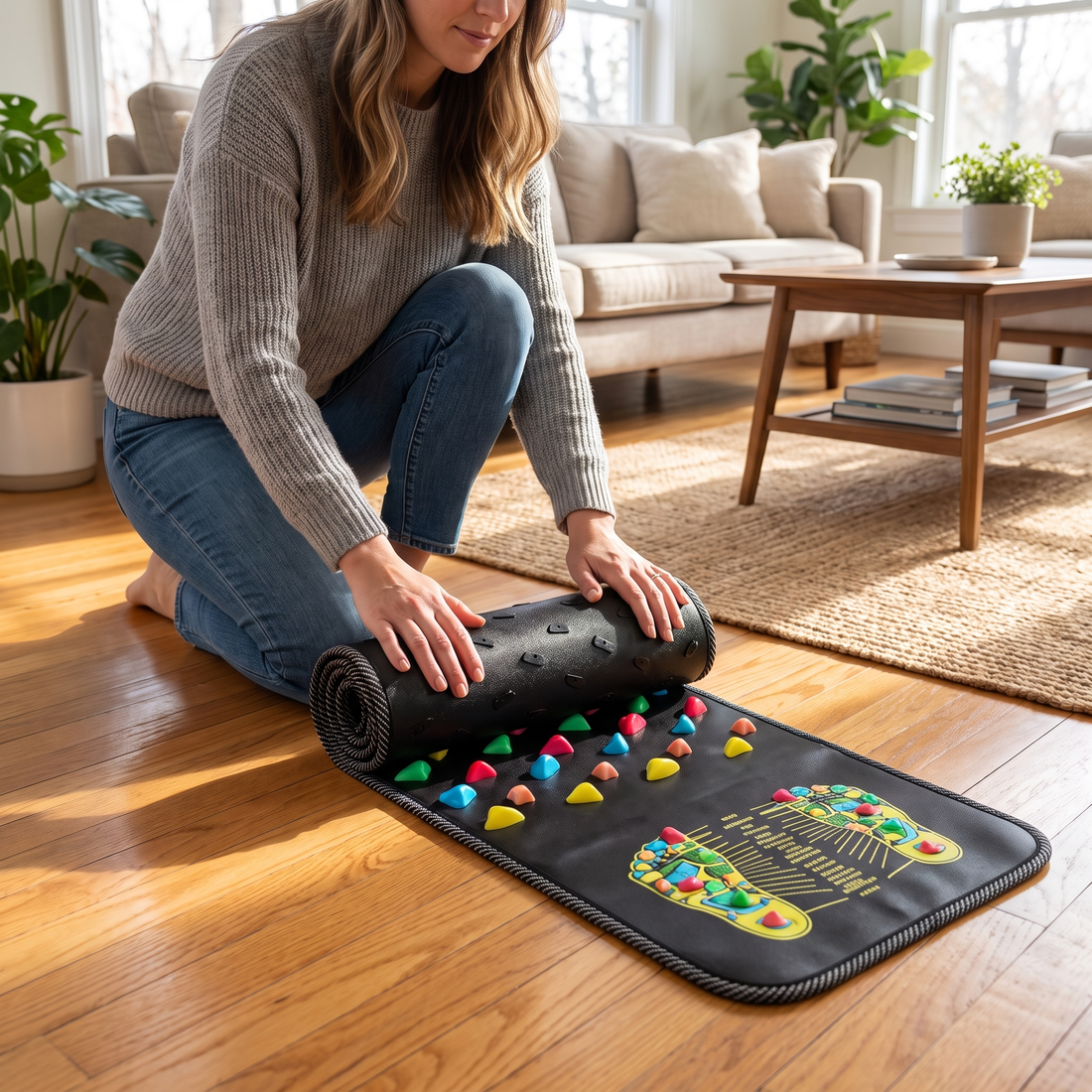
Coated fabric, bound edges, a field of moulded stones, and a printed foot chart at one end. Rolls to about the size of a yoga mat.
Our 60-Night Promise
Use it 60 nights. Make sure stepping off feels like someone's pressed your feet. Make sure the end of a shift stops being the worst part of the day.
If not — email us. Every penny back.
Shipping + who shouldn't use this
Orders leave within 24 hours. Free shipping, tracking emailed when it moves.
Skip this one if you have diabetes, neuropathy, or reduced feeling in your feet. Same if you've had recent foot surgery, or your doctor told you to stay off bare feet. Ask them first.

As seen in




The five minutes that end the day
6:40pm. Shoes off, mat down, before you sit.
The first thirty seconds. The part everyone films.
Stepping off. The part nobody films.
Why every soft thing you bought made it worse
It's called the Cobblestone Protocol. You did everything right. You were just pointed the wrong way.
Inserts. Heat-moulded ones. Custom orthotics. Softer shoes. Staying off them.
Every one of them did the same thing. Added cushioning.
Here's what nobody told you. Your feet are built to read ground that changes — gravel, roots, stone. Modern life took all of it. Flat floors. Ten hours standing still.
And feet that never have to do anything stop being able to do anything.
So cushioning was never the cure. It's more of the cause.
This goes the other way. Five minutes on ground that makes them work. Then you're done.
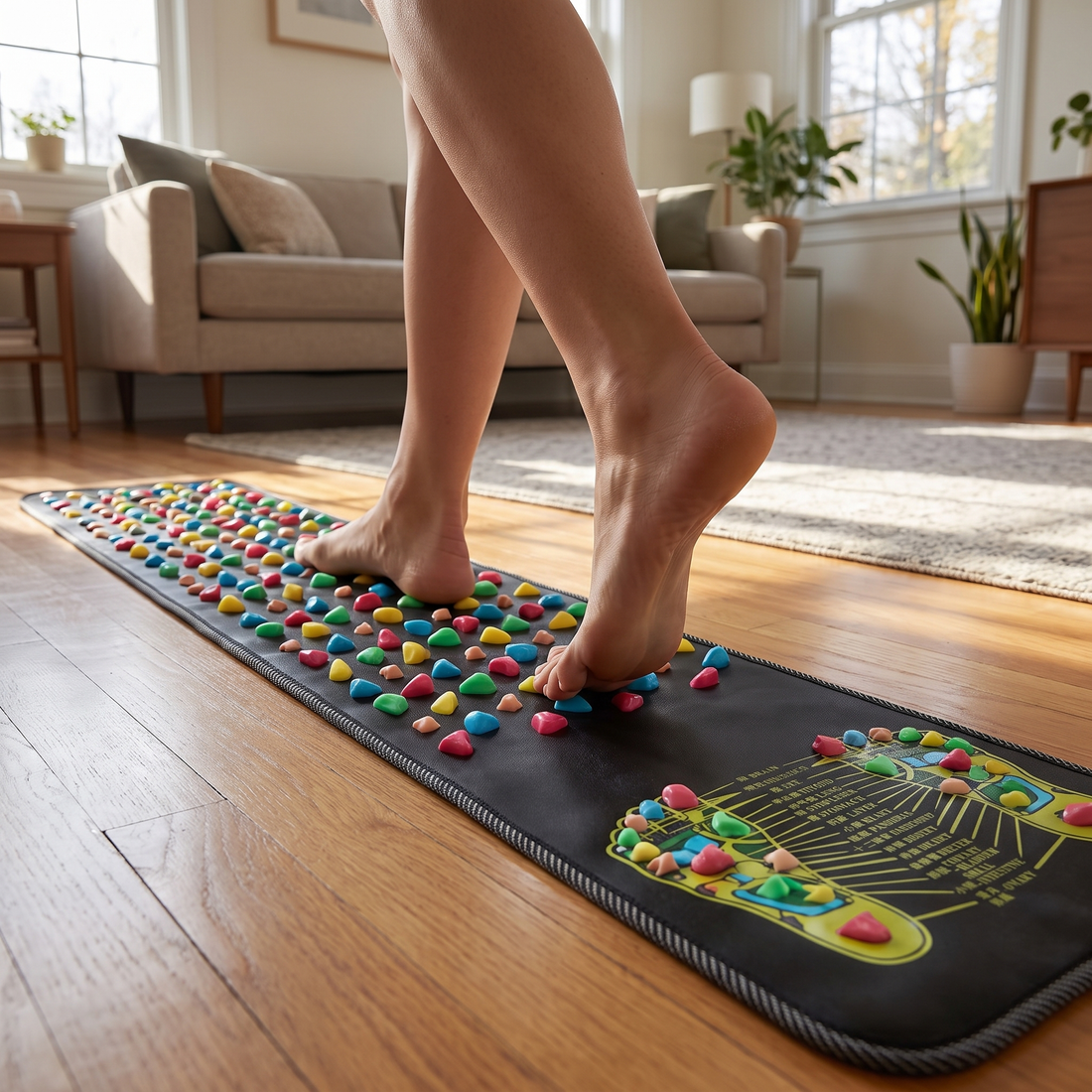
This isn't folklore. It went through a randomized trial.
Li F, Fisher KJ, Harmer P, et al. "Improving Physical Function and Blood Pressure in Older Adults Through Cobblestone Mat Walking: A Randomized Trial." Journal of the American Geriatrics Society, 2005. Oregon Research Institute, funded by the National Institute on Aging, Grant AG20470. PubMed 16078955. The trial used portable synthetic cobblestone mats imported from China. It studied adults aged 60–92 at that dose. It is not a study of this product.
The comment everyone leaves
"Just step on Lego and get the same results"
Top comment. Every video, for eight years. It turned up again last week in German, under the ad that sent you here.
And it's half right. Hard, uneven ground is the idea.
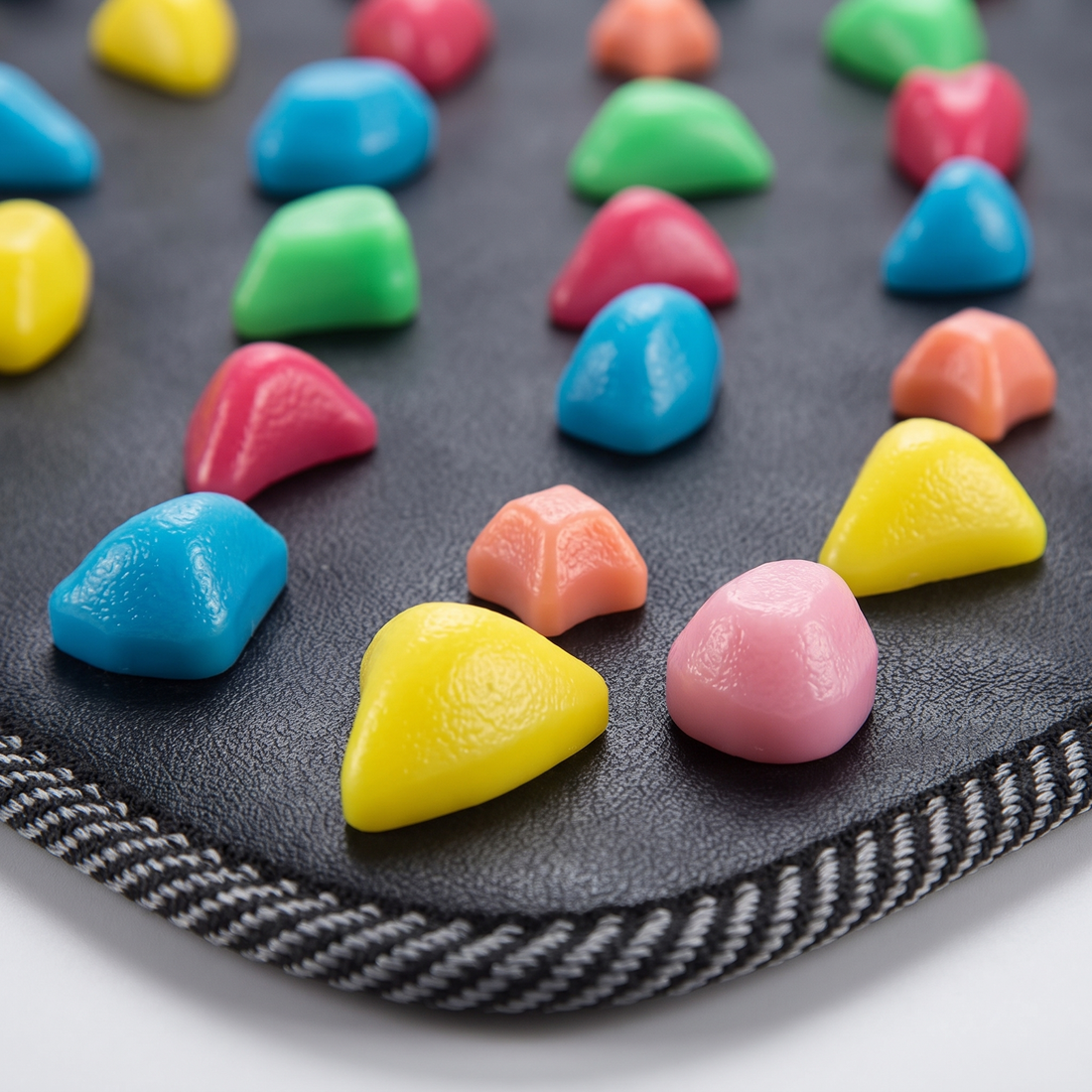
Here's the other half. A Lego is one shape, one height, one square inch — there by accident at 6am.
This is a field of them. Every size, every angle, under your whole foot, on purpose.
Oregon didn't hand 108 people a bag of bricks. They imported a mat.
Dose is the difference.
What you're standing on
The part the cheap ones get wrong
The honest part
The first thirty seconds are genuinely unpleasant
We won't pretend otherwise.
Read the reviews on any mat like this and you'll find these two sentences side by side:
"Too hard, it's like walking on rocks bare footed."
"Yes it hurts so good — that's how you know they're working."
Same object. The difference is almost always how they started.
So start sitting down, socks on, five minutes. That's the first week and that's the whole trick.
By week two most people are barefoot on it while the kettle boils. If you never are — 60 nights, every penny back.
The first two weeks, exactly
People quit these mats for one reason: they start too hard. So don't.
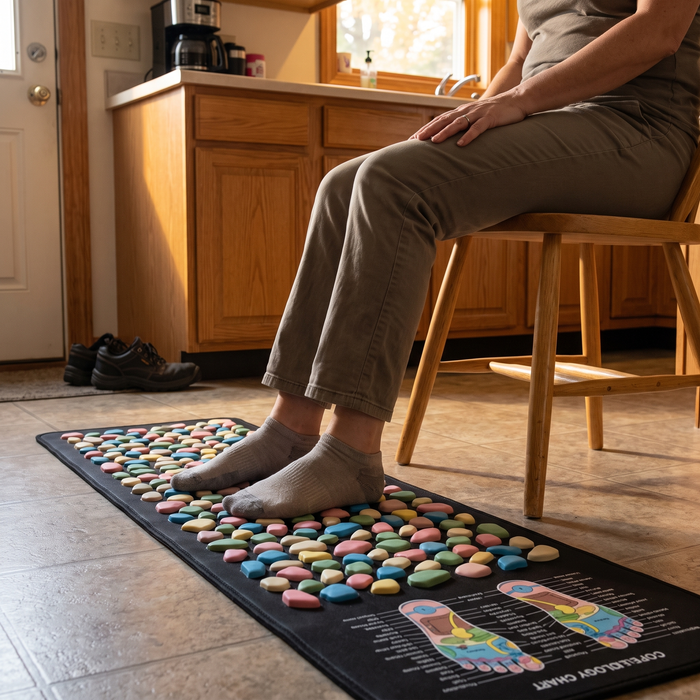
Nights 1–3 · Sit down
Chair. Socks on. Feet resting, two minutes. You're introducing them, not testing yourself.
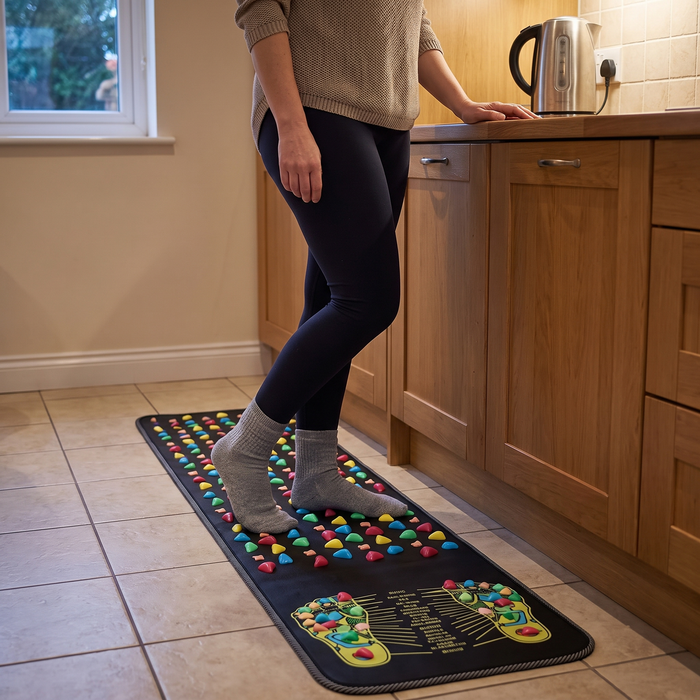
Nights 4–7 · Stand up
Socks still on. Hold the counter. Five minutes while the kettle boils. Find the spots that light up.
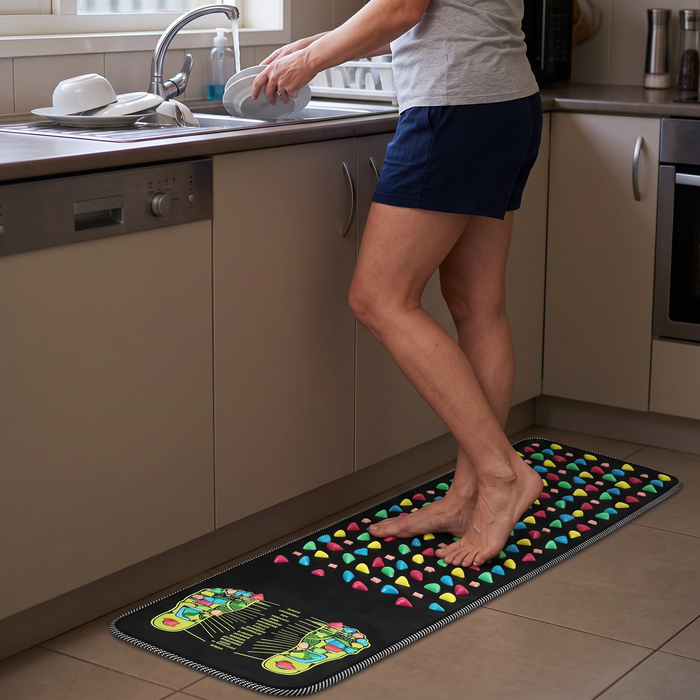
Week 2 · Socks off
Barefoot, five minutes, while you're doing something else. This is the week it stops hurting and starts feeling good.
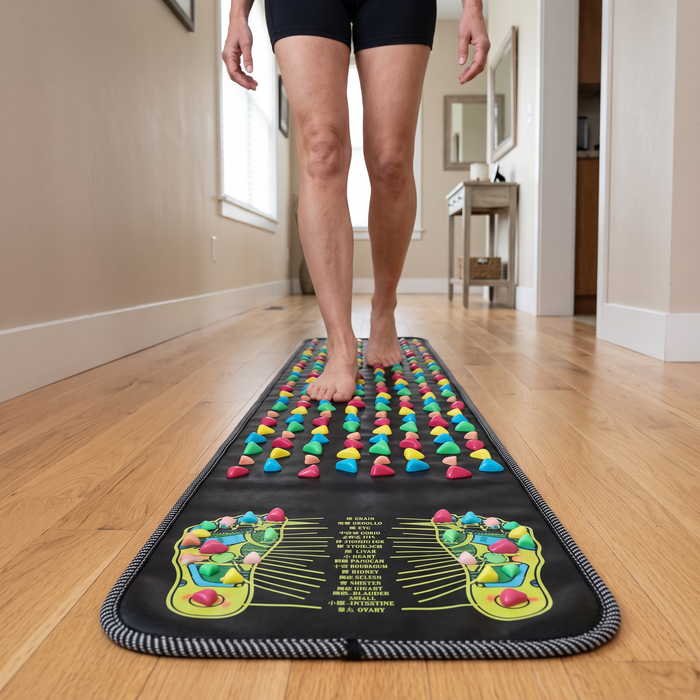
Week 3 on · Walk it
Got the 175 cm? Walk it slowly. Heel, arch, ball, toes. Turn around. Three times a week — the trial's dose.
What actually happens, week by week
Honest stages. And a guarantee that covers every one of them.
Night 1
It hurts, then it doesn't
Thirty seconds of nope. Then the edge goes and warmth comes up through the sole. You step off and your feet feel pressed.
Week 2
The socks come off
It stops being a test. It becomes the thing you do while the kettle boils.
Week 6
The shift ends differently
The one you notice without looking for it. Home, door shut, and you don't reach for the chair straight away.
Week 16
The trial's full dose
Three a week, sixteen weeks — exactly what those 108 adults in Oregon did. You'll have done it on your kitchen floor.
If you've already spent the money
You didn't fail. You were pointed the wrong way.
Insoles. Custom orthotics. Night splints. A cortisone shot that worked once and never again.
Now look at that list. Every single thing on it added more support.
That's not your fault. It's the only direction the industry sells in.
One of the most upvoted lines in the plantar fasciitis community puts it plainer than we can:
"If i put my feet in a rigid supportive shoe it makes things worst. You may need to strengthen and mobilize your feet."
This is that other direction. Five minutes. Less than one appointment.
Which length do you need?
The most common regret here is buying the small one. Eight reviewers told us they wished theirs was bigger. Not one said the opposite.
| Size | Dimensions | Where it lives | Best for |
|---|---|---|---|
| Small | 35 × 35 cm | Under a desk, at the sink | Standing in one spot. A first try. |
| Medium | 120 × 35 cm | Along a kitchen counter | Both feet, room to move. |
| Large | 175 × 35 cm | A hallway. Rolls behind a door. | Walking it — the way the trial ran. |
Torn between two? Take the longer one. The extra length costs you storage and nothing else.
The 175 cm is the only size you can walk end to end. Which is how Oregon ran it.
What the other options cost
The same list your feet have already been through.
Alternative prices are what customers report paying, from public reviews and forum posts. Yours is bought once. Nothing to replace, nothing to plug in.
Two directions. You've only tried one.
| The Cobblestone Mat | More support | |
|---|---|---|
| What it actually does | Gives your feet varied ground | Adds more cushioning |
| Time it costs you | 5 minutes, while you're already standing | All day, every day, forever |
| What can break | Nothing — no motor, no power | Motors, heat elements, batteries |
| Both feet at once | Yes | One at a time, if it's a roller |
| Cost after year one | $0 | New insoles every 6 months |
| Randomized trial behind it | Yes — 108 adults, 16 weeks, 2005 | — |
Where this comes from



Our customers tell it better than we do!
based on 1 067 reviews
The questions people actually ask
Does it hurt?
Yes, at first. About thirty seconds of it, the first few nights. Start sitting down with socks on and most of that goes.
Isn't this just stepping on Lego?
Same idea, different dose. A Lego is one shape on one square inch, by accident. This is a field of stones under your whole foot, on purpose.
How is this different from my insoles?
Opposite direction. Insoles add support so your foot does less. This adds varied ground so it does more.
How long before I notice anything?
The first night — you step off and your feet feel pressed. The bigger change, the end-of-shift one, takes a few weeks.
Which size should I get?
Torn between two? Take the longer one. The 175 cm is the only size you can walk end to end.
Can I use it with socks on?
Yes — and for the first week you should. Socks take the edge off without taking away the point.
Who shouldn't use this?
Anyone with diabetes, neuropathy or reduced feeling in their feet. Same after recent foot surgery, or if your doctor told you to stay off bare feet.
What if it doesn't work for me?
Sixty nights. If the end of a shift doesn't get easier, email us. Every penny back.
Two more months of this, or five minutes tonight
You know how the next eight weeks go if nothing changes. Same shift. Same walk to the car. Same sitting down the second the door shuts.
The other version costs five minutes and one shelf.
Use it 60 nights. Make sure stepping off feels like someone's pressed your feet. Make sure the end of a shift stops being the worst part of your day.
If not — email us. Every penny back.
Only you can decide.